
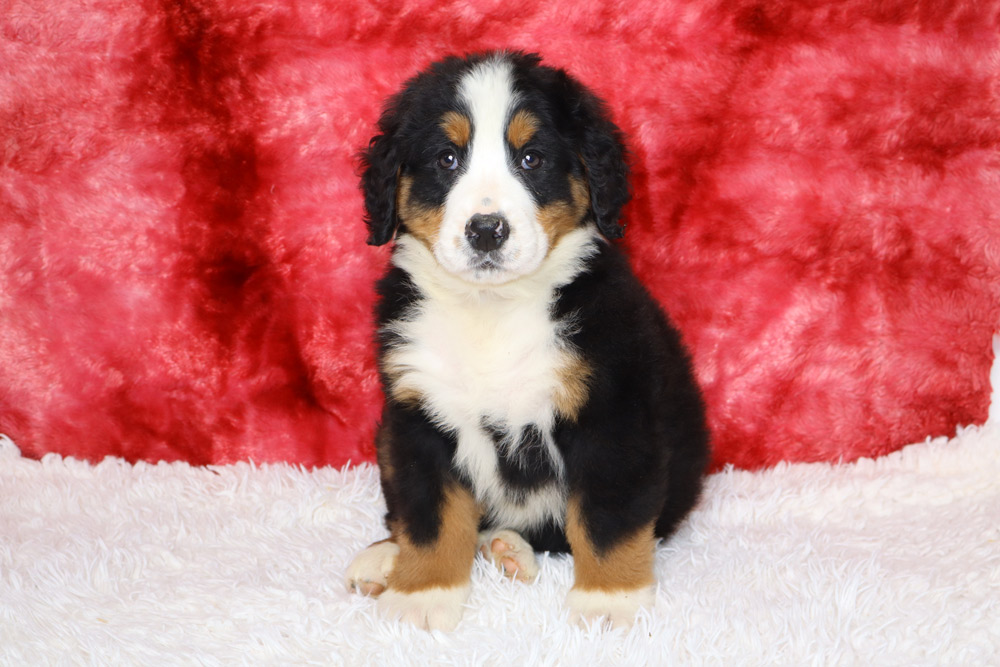
The large size of a Bernese Mountain Dog makes this a breed where the male-female comparison carries more practical weight than it does with most smaller dogs. A full-grown male stands between 25 and 27.5 inches at the shoulder and can reach 115 pounds, while females stand between 23 and 26 inches and top out around 95 pounds. That gap matters practically. In a dog this large, 20 pounds is a real difference in the car, on the couch, and at the end of a leash.
The Breed Before the Sex
Farm work and Swiss Alpine terrain built this breed, and that heritage left them with both a strong physical capability and a genuine need for human connection. They don’t do well in isolation. A Berner left alone for long stretches will struggle in ways that have nothing to do with whether the dog is male or female and everything to do with the breed’s deep attachment to its family.
Both males and females share the same basic temperament. The Bernese are known to be gentle with children, loyal to their household, and patient by nature. A Bernese Mountain Dog shows those traits equally in males and females. What differs is how those qualities are expressed, how much independence or closeness accompanies them, and how quickly each one settles into consistent adult conduct. Those differences are real enough to matter in the buying decision. They won’t define the dog the way individual upbringing and handling will.
Male Bernese Mountain Dogs
Male Bernese Mountain Dogs are usually very affectionate and like to stay close. These dogs lean their full weight against you. They will follow you from room to room. They prefer human contact throughout the day. That attachment runs deep enough that some males develop separation anxiety when left alone regularly, and their typical daily schedule is worth factoring into the decision early. Households with multiple family members often find that their dog spreads warmth evenly across everyone rather than singling out one person.
Training requires patience with the maturity gap. Attention drifts during sessions, and reward-based training in short blocks will produce far better results than long formal drilling because focus spans are genuinely limited in the first year. Positive reinforcement isn’t a preference in this breed so much as a practical necessity, since anyone who pushes with harsh corrections will find the dog shuts down rather than complies.
The male Berners are natural socializers. They’re often friendlier and more immediately warm with strangers and unfamiliar dogs than females are, which makes those early exposure months less stressful for everyone involved. A young male brought to puppy classes, the dog park, and public outings with consistency will often develop into an adult that’s relaxed and non-reactive in nearly any situation. That open social nature draws many families to this sex specifically.
Intact males may mark indoors and show more dominant behavior around other males as they reach sexual maturity. This is why neutering at the right time can significantly reduce both tendencies considerably. Most owners see both issues taper within several weeks post-surgery. Due to research on joint health and cancer outcomes in large breeds, this has shifted the age recommendation over the past decade. Discuss timing with your veterinarian rather than defaulting to whatever you heard first, since large-breed protocols have changed meaningfully in recent years.
Female Bernese Mountain Dogs
Warmth and composure coexist in the female Berner in a way that reads differently from the male’s more open display. She shares everything the breed is known for but carries it with more self-possession, less inclined to follow you room to room and more comfortable spending time on her own terms. That independence shows up most clearly in training. A female will test household rules with more regularity than a male of the same age, which makes clear structure more important early on.
Early training tends to go more smoothly with females in this breed. A young female Berner will frequently pick up commands ahead of male littermates and show more consistency in the first year. This is partly because females reach emotional maturity faster. Also, because they’re more willing to follow a structure without constant reward adjustment. That early advantage narrows around 18 months, but the difference is noticeable during the first six months with a new puppy.
Female Berners experience their first heat between seven and ten months. Behavioral changes, including restlessness and increased attachment-seeking, arrive before the visible signs, which can catch owners off guard the first time. Most vets recommend spaying after the heat completes. Operating during an active cycle carries added surgical risk, and the Bernese Mountain Dog’s elevated cancer history, particularly histiocytic sarcoma, makes the spay timing conversation with your veterinarian worth having early and in detail rather than defaulting to a standard age recommendation.
Size Reality in Daily Life
Size has real daily consequences at these weights regardless of how gentle the dog is. Both will knock a small child down without meaning to. Leash management, spatial awareness, and physical handling matter with both sexes from the first day home, and that reality shouldn’t come as a surprise when you bring a puppy this large through the door.
If you live in a smaller space, have limited physical strength for leash work, or prefer a dog that takes up less room in the car and on the couch, a female Berner is a genuinely practical choice for reasons well beyond character. That’s a legitimate factor, not a compromise.
Adding a Second Dog
Opposite-sex pairings integrate more smoothly than same-sex combinations in most households. Two females sharing a home can develop friction as their personalities solidify, and intact males that haven’t been neutered can occasionally clash as well. Tell us what dog you currently have and we’ll factor that into the match, honestly, including whether we’d suggest waiting rather than rushing a second placement.
Temperament Testing at Blue Diamond Berners
Each puppy in our litters undergoes a structured individual assessment before placement. This includes observations covering social confidence, response to handling, attachment behavior, and interaction with littermates. Male or Female alone tells us very little. We use that profile alongside your household details, including children, other dogs, and your daily schedule, to guide which puppy fits your life. Tell us about your space and your routine and we’ll go from there.
Contact Blue Diamond Berners to ask about available puppies and upcoming litters. Sign up for announcements to stay ahead of availability.